






The “America First” policy of the United States in early 2026 can be largely seen through the recent economic and political coercion targeting Greenland, the largest island in the world, and an autonomous territory of the Kingdom of Denmark.
A 10% import tariff was threatened to be imposed on 8 European countries (Denmark, Finland, France, Germany, the Netherlands, Norway, Sweden, and the United Kingdom) by the Trump administration in response to those countries sending military personnel to Greenland. It would rise to 25% by 1 June, until a deal stipulating the acquisition of Greenland is established.
The ambition of President Donald Trump in acquiring Greenland highlights the U.S.’s growing involvement in great power politics, even at the expense of existing alliances. Consequently, several attributes can be analyzed behind the U.S.’s justifications for its recent frontal decisions.
Why does Trump want Greenland?
The current United States administration has repeatedly emphasized Greenland’s importance in reinforcing missile defense and countering Chinese and Russian influence in the Arctic, supported by Donald Trump’s ambition to purchase Greenland despite local opposition. The idea of sending lump sum payments ranging from $10,000 to $100,000 to Greenlanders to sway them into seceding their land has even been considered, showing foul play in swaying local opinion.
It is worth noting that Greenland, whose land contains 1.5 million tons of rare earth minerals, would greatly disadvantage the United States if it were to fall into the clutches of China or Russia, both of which already possess substantial reserves of. Having access to Greenland’s resources would theoretically reduce the U.S.’ reliance on foreign supply chains drastically for heavy rare earths.
What is the world’s reaction?
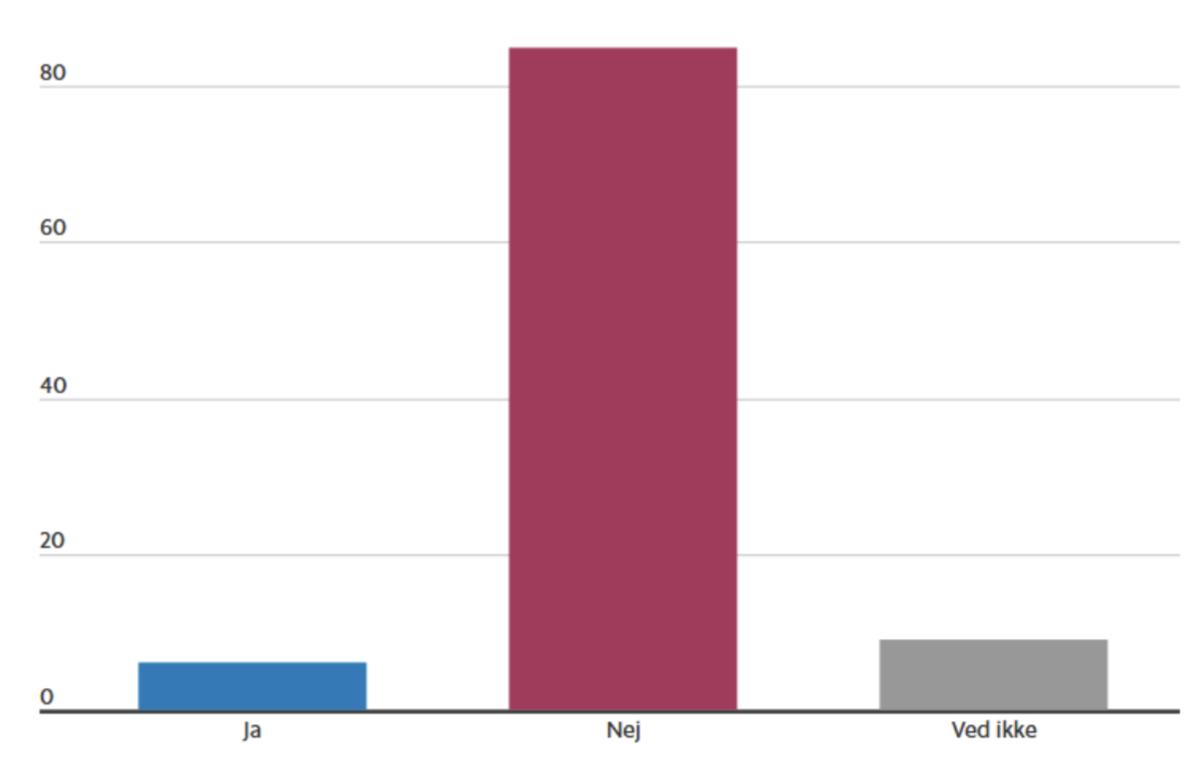
When 500 Greenlanders were asked “Do you want Greenland to step out of the Commonwealth and instead become part of the United States?”, 85% of respondents were opposed to the idea of the Danish island being a part of the United States in comparison to the 6% in favor and the 9% remaining undecided.
NATO officials have also expressed security concerns to U.S. expansion, thus increasing defense commitments to Greenland through investing in drones, maritime patrol aircraft, and fighter jets to uphold the alliance’s collective interests in the High North. As such, Operation Arctic Endurance was launched to expand NATO’s military presence in the region as a reaction to the continuous threats to annex Greenland.
What can we expect in the future?
This is not the first time the United States has attempted to purchase Greenland; in 1946, Denmark rejected an offer of $100 million by then-U.S. President Harry Trump in gold. If economic or diplomatic methods fail in resolving the conflict, there are premonitions of the Greenland crisis escalating militarily, characterized by the undermining of international law and institutions.
“I don’t need international law,” said United States President Donald Trump in an interview with the New York Times about his morality on his foreign policy decisions. Article 2(4) of the UN Charter prohibits UN member states from using coercive force on the territorial integrity of fellow member states, and a violation of this article would mean more strenuous relations between the United States and NATO.
We can even see Donald Trump deviating from existing bilateral agreements such as the 1951 US-Denmark Defense Agreement, which allows operation of U.S. military bases in Greenland and acknowledges Greenland’s sovereignty as an “equal part of the Kingdom of Denmark”.
The recent unilateral actions and hard diplomacy by the United States denotes a shift away from global multilateral agreements in favor of protectionist measures. However, a “framework of a future deal” discussed between U.S. President Donald Trump and NATO Secretary General Mark Rutte have come to light recently. Speculations state that tiny portions of Greenland would be relinquished to the U.S. and NATO military presence would increase as to deter hostile foreign vessels in this proposed deal. Nevertheless, such a deal would require strong cooperation from both sides and a mutual agreement to de-escalate the crisis without the threat of annexation or sovereignty violation. NATO countries are incentivized to collaborate with each other more than ever in light of this issue as to prevent any superpower state from carrying out its national interests with disregard to diplomatic relations and rule of law.